Fewer Repeated Bathroom Transfers
Care can take place in bed, reducing the need to move repeatedly between the bed and a toilet or commode.


Who It Helps
For individuals who cannot safely or comfortably use a toilet, commode, or bedpan, Carebidet supports no-transfer, in-bed toileting care with automated waste removal, warm-water cleansing, and warm-air drying.
Carebidet allows toileting care to happen while the person remains lying in bed, reducing the need for repeated bathroom transfers, bedpan positioning, and hands-on cleanup.
When Care Needs Change
Reduced mobility, weakness, balance problems, urgency, cognitive changes, or the need for hands-on assistance can turn toileting into a demanding care routine. For families, that can mean transfers, nighttime interruptions, lifting, cleanup, and changing linens.
These demands often build gradually. Recognizing them can help families look for ways to make care safer, calmer, and more manageable.
A Different Approach
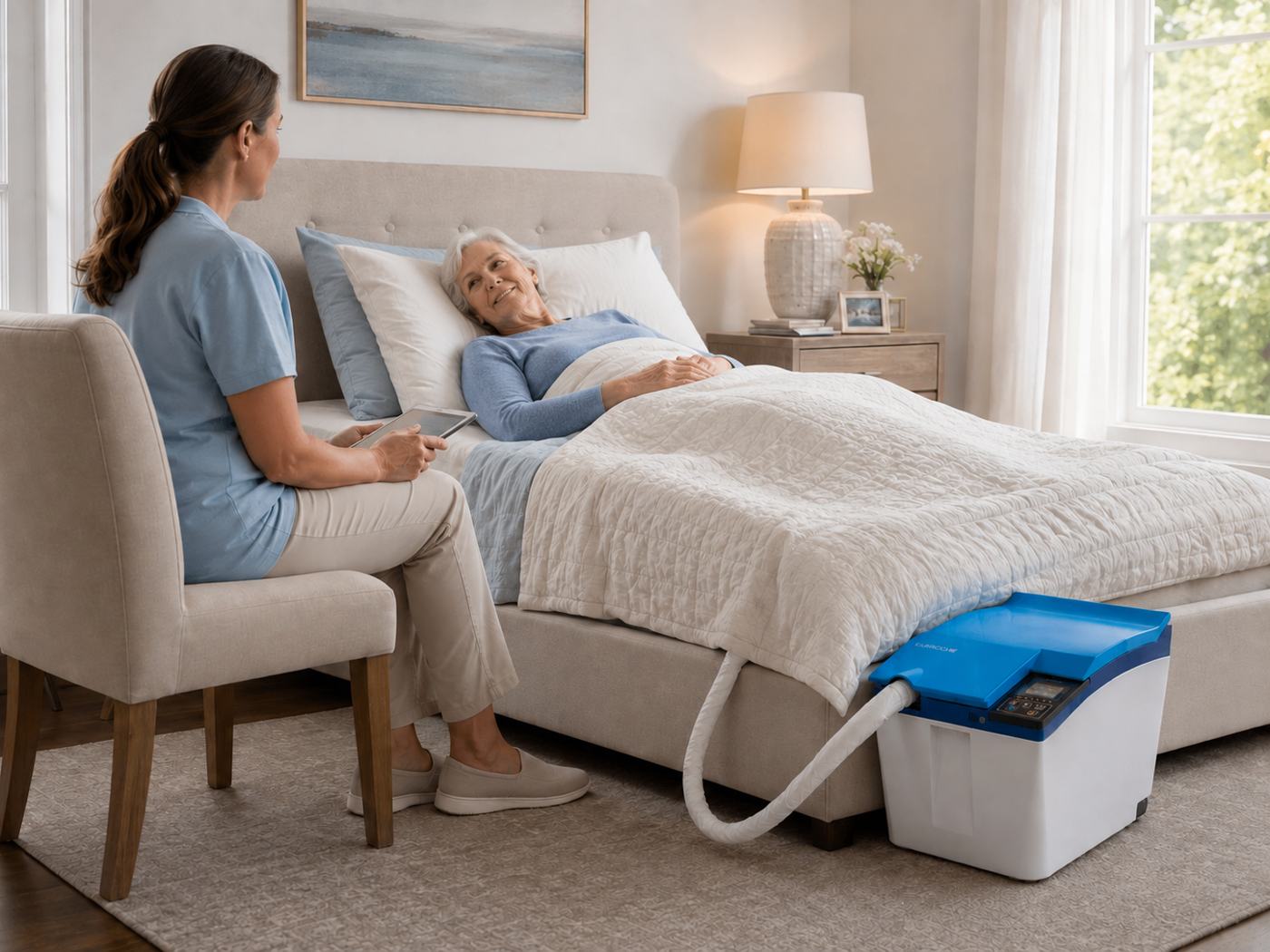
Carebidet allows toileting care to take place while the individual remains in bed, reducing many of the steps involved in conventional toileting care.
Care can take place in bed, reducing the need to move repeatedly between the bed and a toilet or commode.
Carebidet detects elimination, removes waste, cleanses with warm water, and dries with warm air.
A sealed waste-handling system helps contain waste and reduce the cleanup associated with conventional toileting routines.
Less repeated handling and cleanup may help intimate care feel more private, predictable, and manageable.
Beyond the Routine
Choose a condition or care need to explore the specific toileting challenges involved and how Carebidet may fit into the care routine.
Parkinson’s can make toileting difficult because of slowed movement, rigidity, urgency, nighttime urination, balance problems, and bladder or bowel issues.
As ALS progresses, transfers, repositioning, toileting, and hygiene may require increasing assistance.
After a major stroke, standing, pivoting, communication, or bathroom access may become difficult.
When memory, communication, mobility, or comfort decline, toileting care can become stressful and disruptive.
Paralysis or spinal cord injury can affect transfers, continence, bowel routines, positioning, and personal hygiene, making conventional toileting difficult or highly assisted.
Ehlers-Danlos Syndromes (EDS), Arthrogryposis Multiplex Congenita (AMC), limb difference, and other mobility-related conditions can affect balance, joint movement, strength, transfers, toileting independence, and personal hygiene.
Research & Further Reading
Looking for research beyond a specific diagnosis? Browse published studies and articles on toileting care, incontinence, falls, caregiver workload, pressure injury, moisture management, and related care needs.
Explore Carebidet for Your Needs
Explore information for your condition or care situation, then connect with COHealth to discuss whether Carebidet may be a practical fit.
Carebidet is a supportive in-bed toileting care system. It is not intended to diagnose, treat, cure, or prevent any disease or medical condition. Carebidet does not replace medical care or professional caregiver judgment. Individual care needs vary.