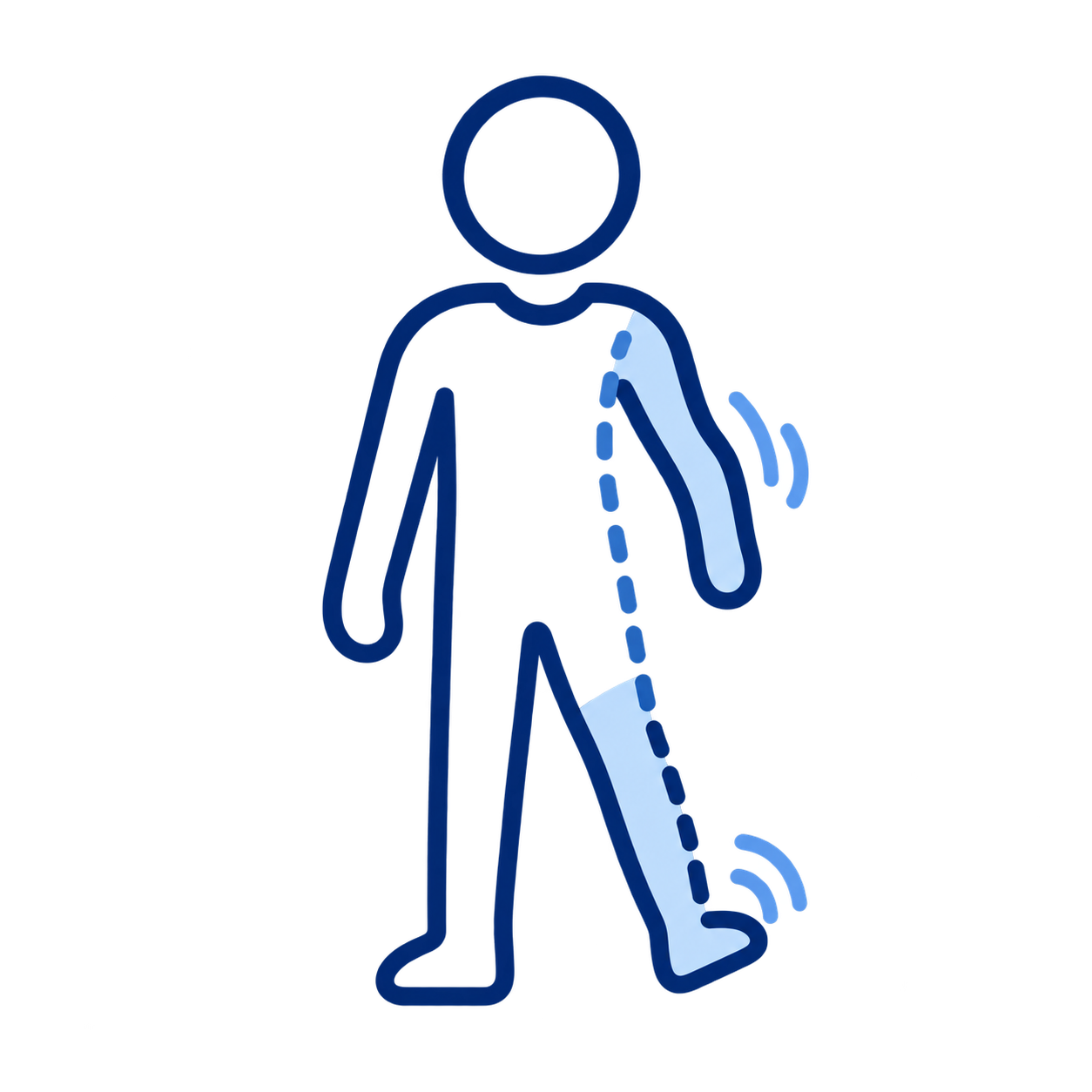
Weakness & Paralysis
One-sided weakness can make standing, pivoting and transferring difficult or unsafe.



A stroke can suddenly affect strength, balance, mobility, communication, judgment and bladder or bowel control. For families, toileting can quickly become one of the hardest parts of daily care.
Carebidet provides automated, no-transfer, in-bed toileting care for people who are bed bound or significantly mobility challenged.
Why stroke changes toileting
A bathroom routine requires communication, movement, balance, judgment, timing and hygiene. Stroke can affect several of these abilities at once.
One-sided weakness can make standing, pivoting and transferring difficult or unsafe.

A survivor may take a few steps yet still be unable to complete a bathroom transfer safely.

Aphasia or other communication problems can make it hard to alert a caregiver in time.

Attention, judgment, memory and task sequencing can interfere with independent toileting.
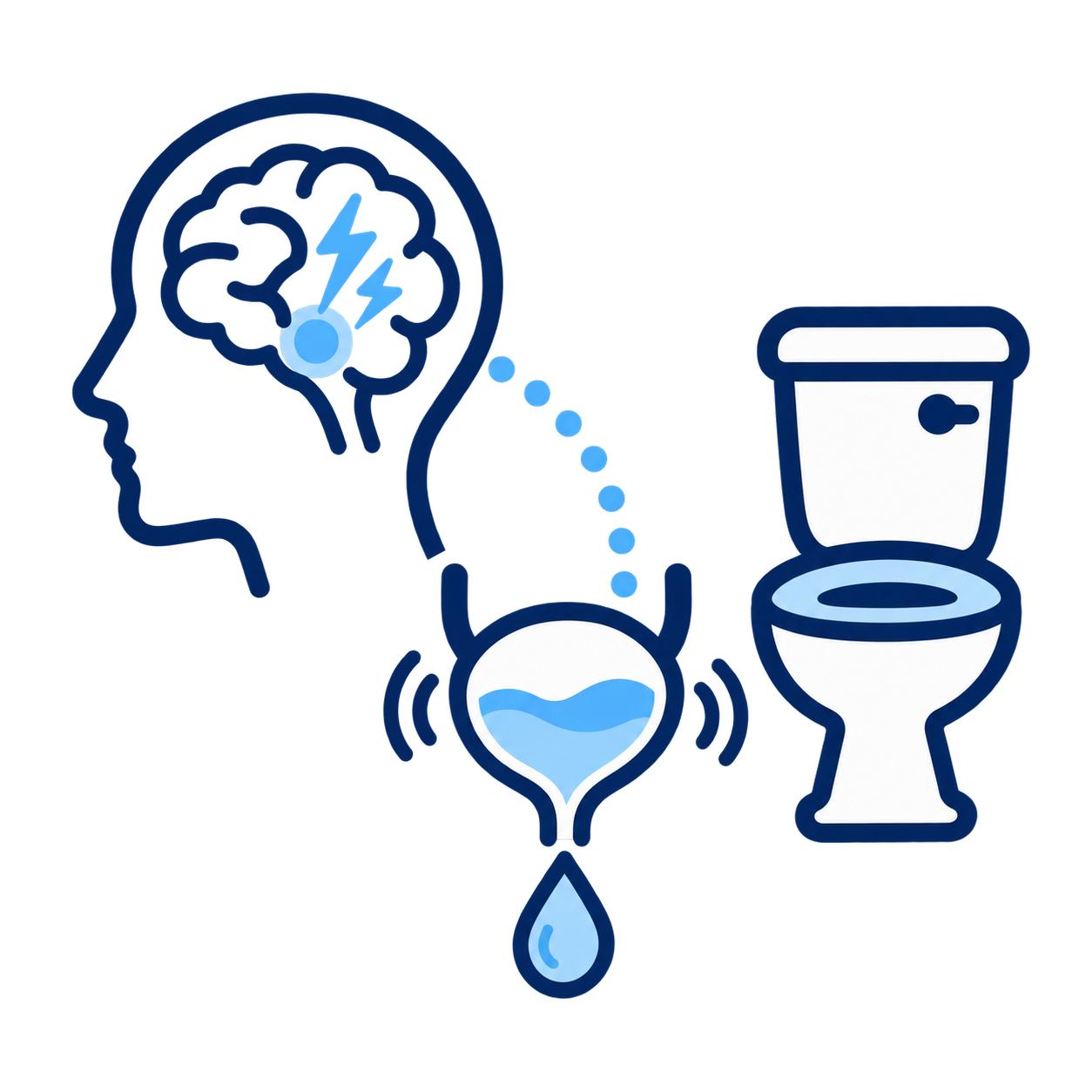
Loss of bladder or bowel control can add urgency, cleanup, bedding changes and distress.

Transfers, clothing, hygiene and repositioning may require another person’s help.

The transfer burden
A stroke survivor may know they need to go, yet weakness, poor balance or limited mobility can make the transfer itself difficult or unsafe.
Research on stroke survivors supports an important point: continence problems after stroke can be closely connected to immobility and dependence, not only to loss of bladder or bowel control.
Communication & toileting
Stroke-related aphasia can affect speaking and understanding. A survivor may recognize the need to urinate or have a bowel movement but be unable to communicate it clearly or quickly enough for a caregiver to respond.

Care can become a cycle of watching, checking, guessing and reacting after an accident—especially when the person cannot get to the bathroom independently.
Carebidet detects urine or feces and can begin waste removal, washing and drying without requiring the person to first call out, press a button or explain what happened.
How Carebidet Helps
Carebidet is designed for people who are bed bound or significantly mobility challenged. Instead of moving the person to a bathroom, commode or bedpan, the system manages the toileting event in bed.
Sensors recognize urine or feces when elimination occurs.
Waste is moved through a sealed system into the Carebidet unit.
Warm water automatically washes the perineal area.
Warm air helps leave the area clean, dry and more comfortable.
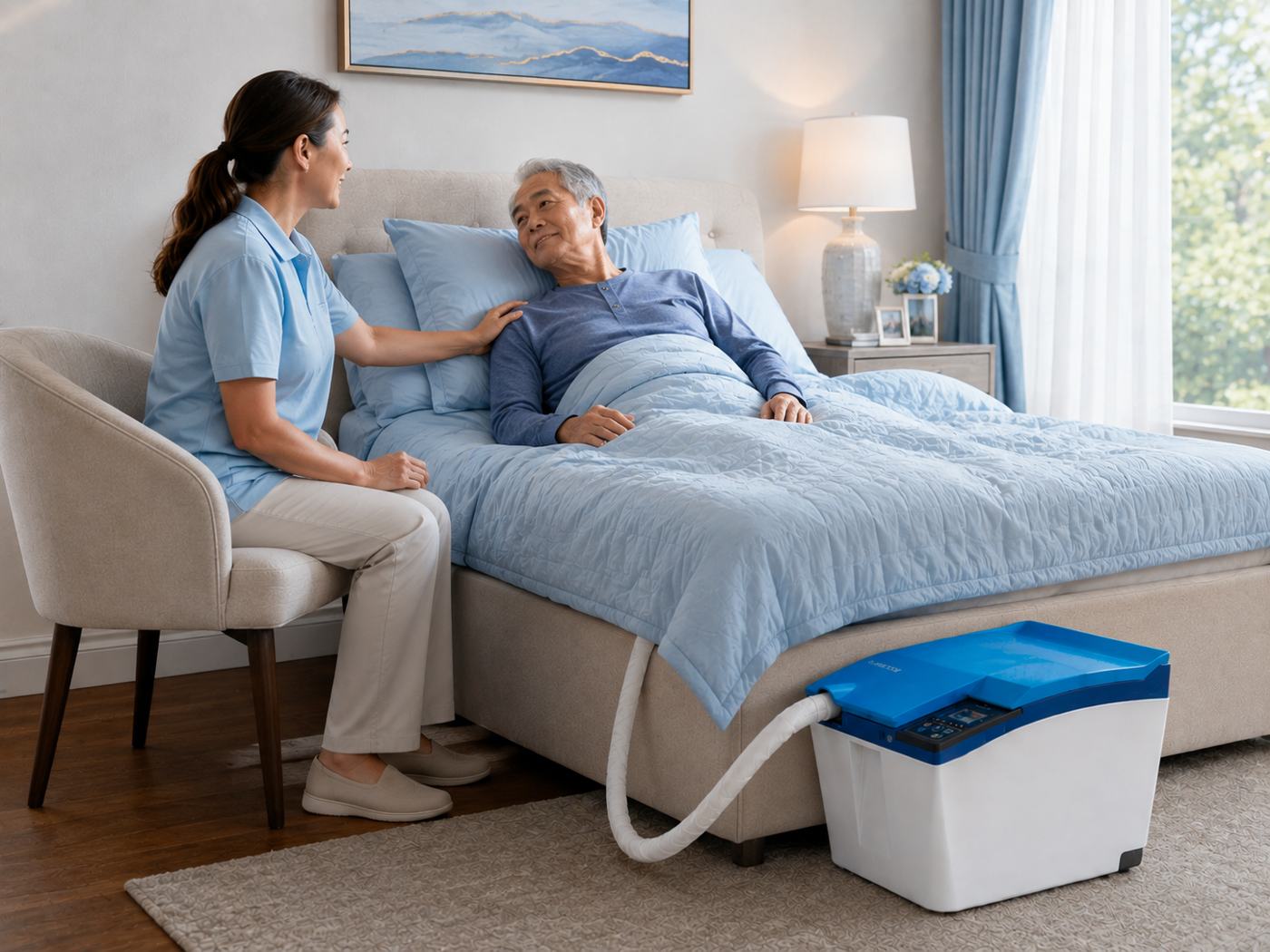
Supporting both sides of care
For the stroke survivor
When mobility or communication changes after a stroke, toileting can become one of the most personal losses of independence. In-bed automated care can reduce repeated handling, bedpan positioning and some of the embarrassment associated with accidents and intimate cleanup.
For the family caregiver
A stroke-specific qualitative study of family caregivers managing urinary or fecal incontinence described four central experiences: chaos, hypervigilance, exhaustion and creating a new life.
Source: Tseng CN, Huang GS, Yu PJ, Lou MF. A Qualitative Study of Family Caregiver Experiences of Managing Incontinence in Stroke Survivors. PLOS ONE. 2015. Read the study →
Published evidence
Published stroke research helps explain why toileting can become so difficult for survivors and the families caring for them—from incontinence and mobility loss to communication challenges and caregiver exhaustion.
Among 135 consecutive stroke patients, urinary incontinence occurred in 51% and fecal incontinence in 23% within the first year. Immobility and dependency were important correlates.
View on PubMed →Family caregivers of stroke survivors described chaos, hypervigilance, exhaustion and the need to create a new life around continence care.
Read full study →Urinary incontinence was associated with caregiver burden, along with long caregiving hours and disrupted nighttime sleep.
View on PubMed →Caregivers of stroke survivors with aphasia reported greater task difficulty, with communication among the most upsetting and difficult issues.
View on PubMed →A 2024 meta-analysis of 21 studies and 7,327 patients estimated post-stroke urinary incontinence at 38% and identified multiple functional risk factors.
View on PubMed →Additional Support
Trusted independent organizations that may help stroke survivors, families, and caregivers find information, support, and practical guidance.
Stroke recovery, caregiver guidance, support and care navigation.
Communication and aphasia support for survivors and care partners.
Practical caregiver guidance, education and state-by-state resources.
Emotional recovery, identity, relationships and life after stroke.
Stroke caregiver education and practical resources for Veterans and families.
International recovery, caregiver and life-after-stroke resources.
Stroke Recovery & Care at Home
For stroke survivors who are bed bound or significantly mobility challenged, Carebidet provides automated in-bed toileting care designed to support dignity while reducing some of the physical demands placed on family caregivers.
Carebidet is an assistive toileting system. It does not treat stroke or cure urinary or fecal incontinence. Individual care requirements should be discussed with appropriate healthcare professionals.